
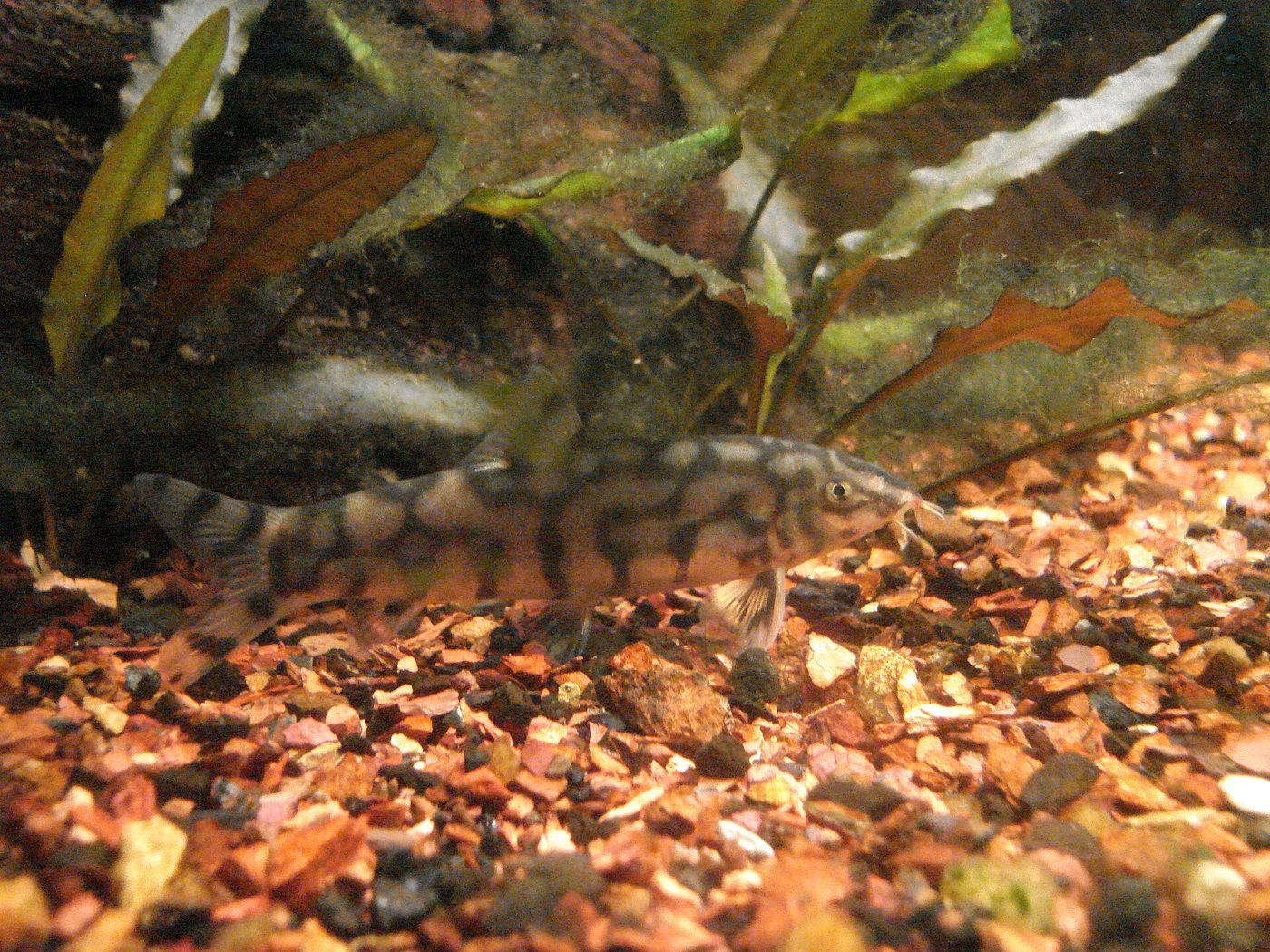
The yoyo loach, sometimes sold as the Pakistani loach, is named after the “YOYO” pattern its markings spell out on young fish. It is a busy, playful loach and a great snail hunter.
| Scientific name | Botia almorhae |
|---|---|
| Family | Botiidae |
| Origin | Northern India and Nepal |
| Adult size | 10 to 15 cm |
| Lifespan | 10 to 15 years |
| Minimum tank | 150 litres |
| Temperature | 24 to 28°C |
| pH | 6.5 to 7.5 |
| Hardness | Up to 15 dGH |
| Swims in | Bottom |
| Temperament | Lively, can be pushy |
| Group size | 5 or more |
| Diet | Omnivore: sinking pellets, frozen foods, snails |
| Difficulty | Easy |
What it is like to keep
Yoyos are social and need a group; kept alone they become reclusive or aggressive. They are active, noisy (they click) and squabble among themselves, which is normal. Expect them to dig and rearrange the substrate.
Setting up the tank
A tank of 150 litres or more with sand, plenty of caves, wood and rock. Moderate flow and good oxygenation. Cover small gaps, as loaches will squeeze into them.
Feeding
Sinking pellets, frozen bloodworm and brine shrimp, and any pest snails they can find.
Breeding
Not bred in home aquaria.
Tank mates
Good with robust fish: barbs, danios, larger gouramis, bristlenose and clown loaches. Avoid long-finned, slow fish.
Graham’s tip: If you’ve got a snail outbreak, a group of yoyos will clear it in weeks. Just be sure you want five loaches for the next decade.
More care sheets: Species Profiles. Questions? Ask in the comments below and I’ll answer.
Photo: Orishas92, Public domain, via Wikimedia Commons.

Get in touch I’d love to hear from you