
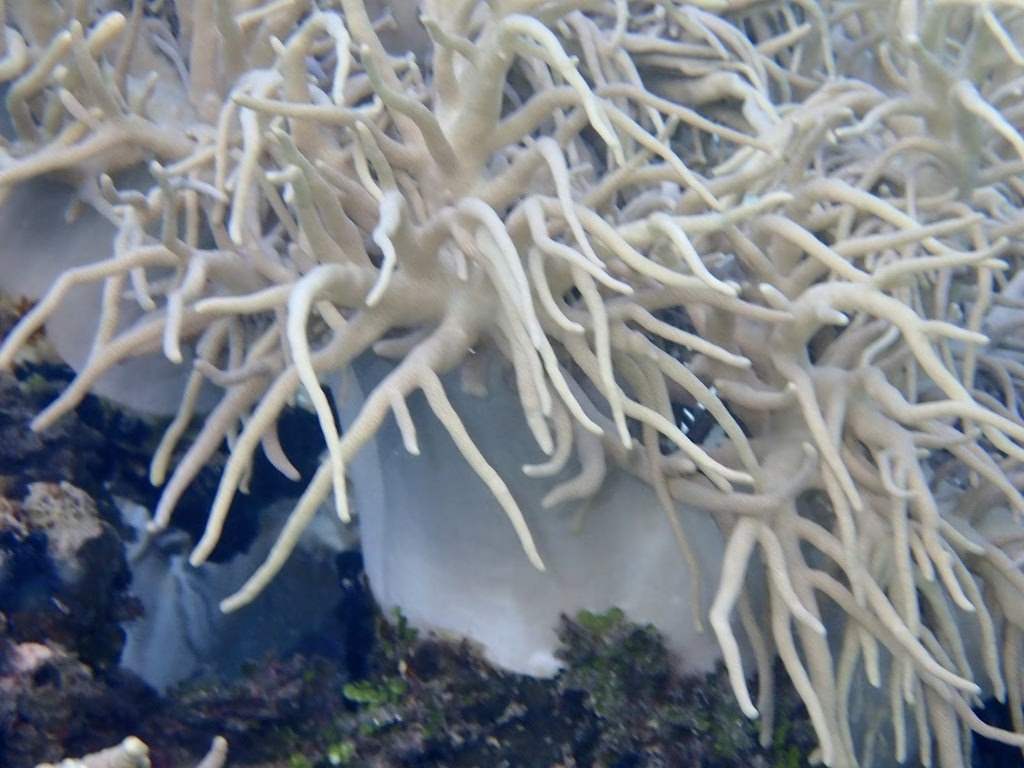
Finger leathers form clusters of finger-like branches. Easy, fast-growing and good for filling space. This Finger Leather Coral care sheet covers everything you need to keep one well.
| Scientific name | Sinularia spp. |
|---|---|
| Type | Soft coral (leather) |
| Origin | Indo-Pacific |
| Lighting | Moderate to high |
| Water flow | Moderate to strong |
| Placement | Middle rock |
| Growth | Fast |
| Aggression | Releases chemicals |
| Feeding | Photosynthetic |
| Water | 24 to 26°C, 1.025 to 1.026 SG, alkalinity 7 to 9 dKH, calcium 400 to 450 ppm, magnesium 1,300 to 1,400 ppm |
| Difficulty | Easy |
What it is like to keep
Finger leathers grow fast and fill space quickly. They are hardy and forgiving, and their branches sway beautifully in the current.
Like other leathers, they release chemicals to fight off neighbours, so run activated carbon in a mixed reef.
Leathers occasionally close for several days to shed a waxy film; a short spell of stronger flow helps. A finger leather that slumps and droops all day, rather than shedding, usually points to a sudden salinity or temperature change, or to a fish picking at it. Colonies can reach 30 cm or more, so allow space.
Placement, light and flow
Middle rock with moderate to strong flow and moderate to high light.
Feeding
Photosynthetic. No target feeding needed.
Propagation and fragging
Snip a branch with scissors and rubber-band it to a rock or frag plug.
Neighbours and compatibility
Fine with fish. Keep space from LPS and SPS.
Graham’s tip: A good finger leather in the right flow sways like a field of corn. Lovely movement for a reef.
More care sheets: Soft Corals. Questions? Ask in the comments below and I’ll answer.
Photo: iNaturalist user, CC0, via iNaturalist.
Get in touch I’d love to hear from you