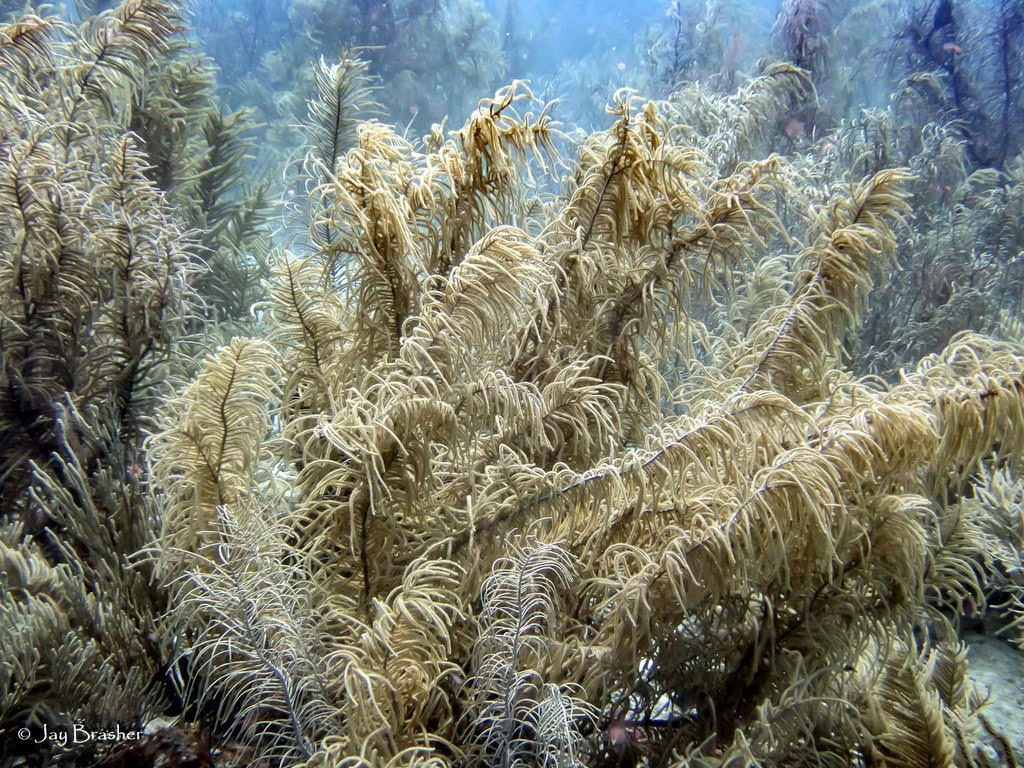
Photosynthetic gorgonians are Caribbean sea rods and fans with fluffy polyps. They add height and movement.
| Scientific name | Antillogorgia, Eunicea and Pseudoplexaura spp. |
|---|---|
| Type | Soft coral (sea fan / sea rod) |
| Origin | Caribbean |
| Lighting | Moderate to high |
| Water flow | Strong, alternating |
| Placement | Upright on rock or the sand |
| Growth | Moderate |
| Aggression | Low |
| Feeding | Photosynthetic; benefit from fine foods |
| Water | 24 to 26°C, 1.025 to 1.026 SG, alkalinity 7 to 9 dKH, calcium 400 to 450 ppm, magnesium 1,300 to 1,400 ppm |
| Difficulty | Easy to moderate |
What it is like to keep
Photosynthetic gorgonians are the sea rods and sea plumes of the Caribbean. They add height, movement and a natural look that very few other corals can match.
Choose brown, purple or tan species with fluffy polyps; these contain zooxanthellae and live mainly from light. Brightly coloured red, orange or yellow gorgonians without brown tissue are usually non-photosynthetic and need several feeds a day, so they are for experienced keepers only.
Placement, light and flow
Plant them upright in a rock crevice or frag plug in the sand, with strong, alternating flow that makes them sway, and moderate light. Avoid placing them where they shade lower corals.
Feeding
Mostly photosynthetic. A weekly dose of fine coral food or rotifers helps polyp extension and growth.
Propagation and fragging
Cut a branch with sharp scissors, strip a centimetre of tissue from the base and glue it upright into a frag plug. It roots and continues to grow.
Neighbours and compatibility
Peaceful with corals and fish. Butterflyfish and some dwarf angels may nibble the polyps.
Graham’s tip: If it’s bright red or orange and has no brown, it’s probably non-photosynthetic. Skip it unless you’ll feed it daily.
More care sheets: Soft Corals. Questions? Ask in the comments below and I’ll answer.
Photo: Jay Brasher, CC BY, via iNaturalist.
Get in touch I’d love to hear from you