
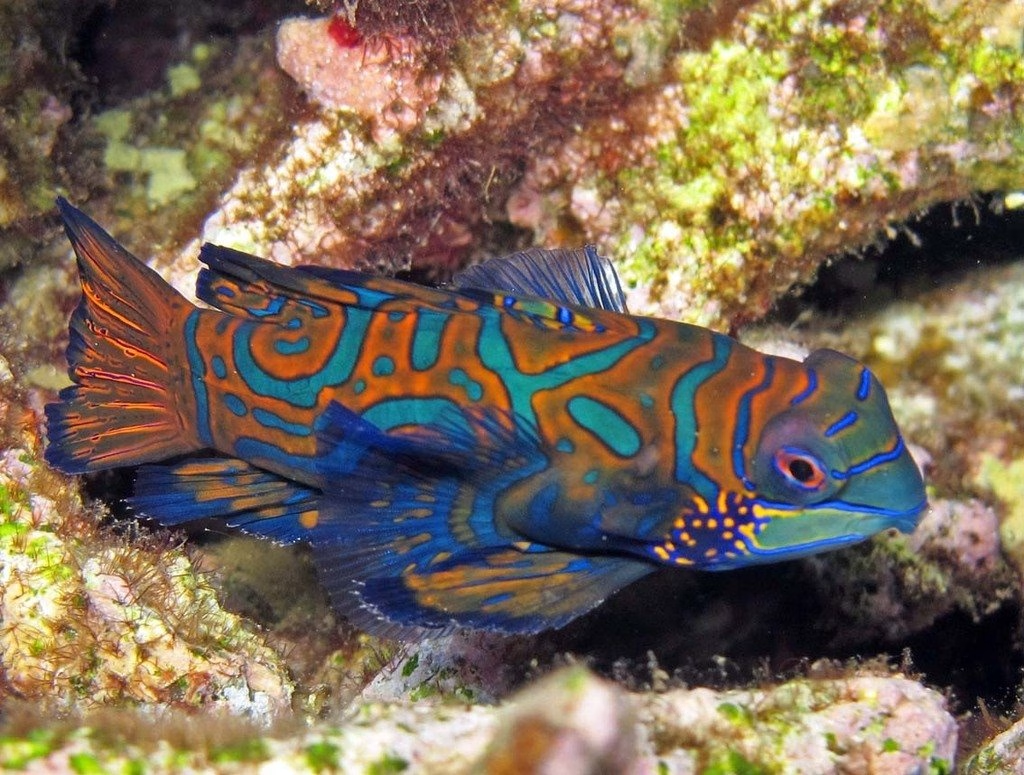
The mandarin is one of the most beautiful fish in the sea, swirled in blue, orange and green. It is also one of the most often starved in captivity. This Mandarin Dragonet care sheet covers everything you need to keep one well.
| Scientific name | Synchiropus splendidus |
|---|---|
| Family | Callionymidae |
| Origin | Western Pacific |
| Adult size | 7 cm |
| Lifespan | 10 years plus |
| Minimum tank | 300 litres (mature) |
| Temperature | 24 to 27°C |
| pH | 8.1 to 8.4 |
| Salinity | 1.023 to 1.026 SG |
| Swims in | Bottom |
| Temperament | Peaceful |
| Group size | Singly or pair |
| Reef safe | Yes |
| Diet | Micro-predator: live copepods; captive-bred may take frozen foods |
| Difficulty | Advanced |
What it is like to keep
Wild mandarins eat live copepods almost exclusively. A tank needs a big, established copepod population. Captive-bred fish trained on frozen foods are far better choices.
Setting up the tank
Mature reef tank of 300 litres plus with lots of live rock and a refugium for copepods.
Feeding
Live copepods, plus frozen foods for captive-bred fish.
Breeding
Pairs spawn at dusk; larvae are very hard to raise.
Tank mates
Peaceful fish that don’t compete for copepods: clowns, grammas, firefish.
Graham’s tip: Only buy a mandarin if you see it eating frozen food in the shop. Otherwise wait until your tank is a year old and full of pods.
More care sheets: Marine Fish Database. Questions? Ask in the comments below and I’ll answer.
Photo: Lakshmi Sawitri, CC BY, via iNaturalist.
Get in touch I’d love to hear from you