
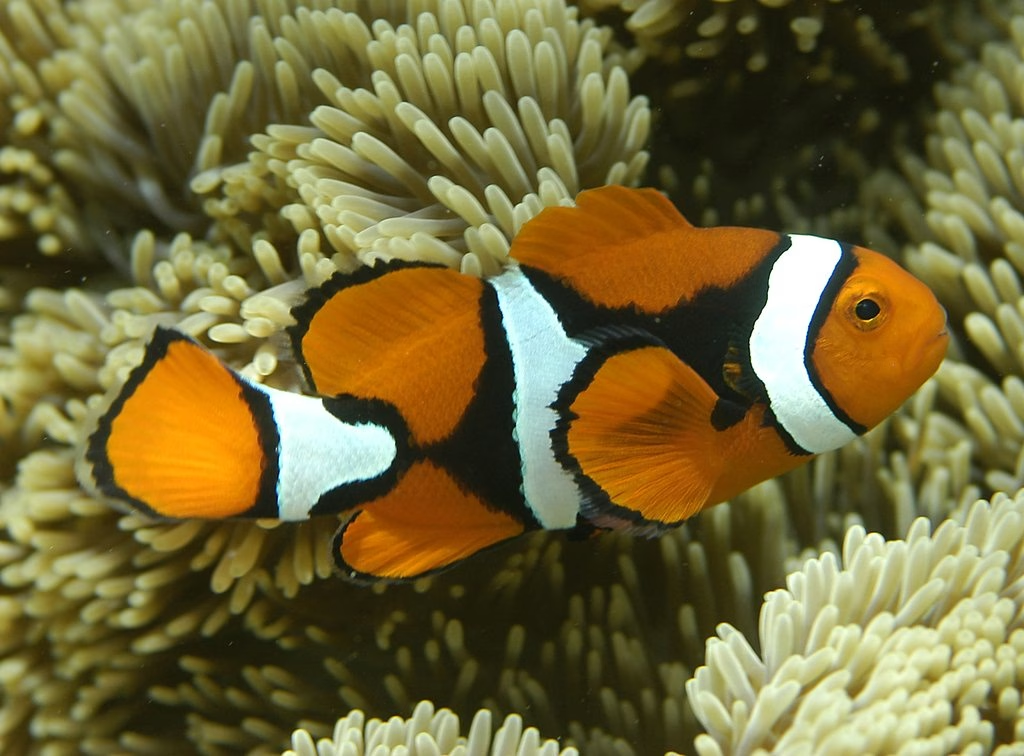
The true percula looks almost identical to the ocellaris but has thicker black margins on its white bands and ten dorsal spines rather than eleven. This Percula Clownfish care sheet covers everything you need to keep one well.
| Scientific name | Amphiprion percula |
|---|---|
| Family | Pomacentridae |
| Origin | Northern Queensland and Melanesia |
| Adult size | 8 to 11 cm |
| Lifespan | 15 to 20 years plus |
| Minimum tank | 75 litres for a pair |
| Temperature | 24 to 27°C |
| pH | 8.1 to 8.4 |
| Salinity | 1.023 to 1.026 SG |
| Swims in | Middle, around a host |
| Temperament | Peaceful to mildly territorial |
| Group size | Pair |
| Reef safe | Yes |
| Diet | Omnivore: pellets, frozen mysis, nori |
| Difficulty | Easy |
What it is like to keep
Captive-bred perculas are as easy as ocellaris but a little feistier. Designer morphs (Picasso, Platinum) are all bred from perculas.
Setting up the tank
Cycled reef or fish-only tank with live rock. 75 litres for a pair.
Feeding
Pellets, frozen mysis, brine shrimp and algae foods.
Breeding
Same as ocellaris: eggs near the host, larvae need rotifers.
Tank mates
Peaceful reef fish: grammas, firefish, cardinals, blennies.
Graham’s tip: Don’t mix percula and ocellaris pairs in the same small tank. They’ll squabble over territory.
More care sheets: Marine Fish Database. Questions? Ask in the comments below and I’ll answer.
Photo: ARC Centre of Excellence for Coral Reef Studies, CC BY, via iNaturalist.
Get in touch I’d love to hear from you