
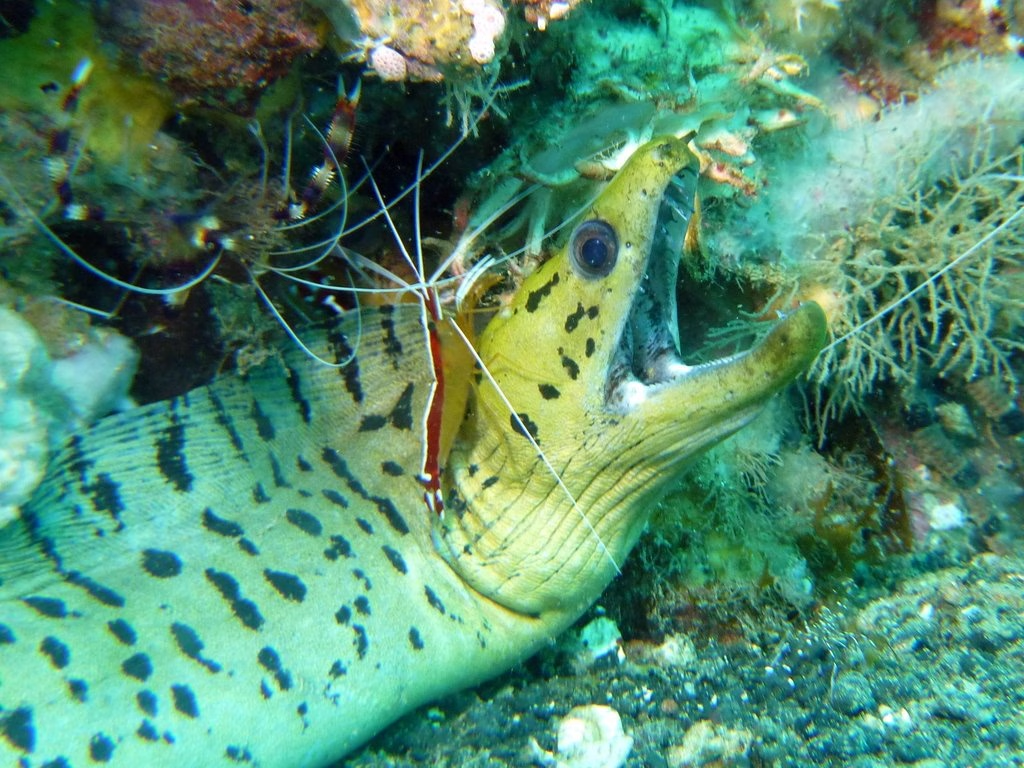
The skunk cleaner shrimp has a white stripe down a red back. It cleans parasites from fish and even your fingers.
| Scientific name | Lysmata amboinensis |
|---|---|
| Family | Lysmatidae |
| Origin | Indo-Pacific and Red Sea |
| Adult size | 6 cm |
| Lifespan | 2 to 3 years |
| Minimum tank | 40 litres |
| Temperature | 24 to 27°C |
| pH | 8.1 to 8.4 |
| Salinity | 1.023 to 1.026 SG |
| Temperament | Peaceful |
| Reef safe | Yes |
| Diet | Scavenger: leftovers, pellets, frozen foods |
| Difficulty | Easy |
What it is like to keep
The skunk cleaner shrimp (Lysmata amboinensis) has a red and white striped back and long white antennae. It runs a “cleaning station”, picking parasites and dead skin from fish that line up to be cleaned. Most fish learn to visit it within days, and many keepers enjoy getting a “manicure” when their hand goes in the tank.
They are hardy once settled but sensitive to sudden changes in salinity and to copper medications. Every few weeks they moult and leave a perfect empty shell; don’t panic, that’s not a dead shrimp.
Setting up the tank
Any reef or fish-only tank with stable salinity and rock caves to hide in while moulting. Drip-acclimatise over an hour.
Feeding
Scavenges leftovers and takes pellets and frozen foods. Target-feed if fish are taking everything.
Breeding
Hermaphrodites: two will happily pair and release larvae every couple of weeks, which your fish will eat. Raising them is a specialist job.
Tank mates
Most reef fish. Avoid lionfish, triggers, puffers and large hawkfish, which eat shrimp.
Graham’s tip: Drip-acclimate shrimp slowly. Salinity shock is the main killer.
More care sheets: Reef Invertebrates. Questions? Ask in the comments below and I’ll answer.
Photo: Kai Squires, CC BY, via iNaturalist.
Get in touch I’d love to hear from you