
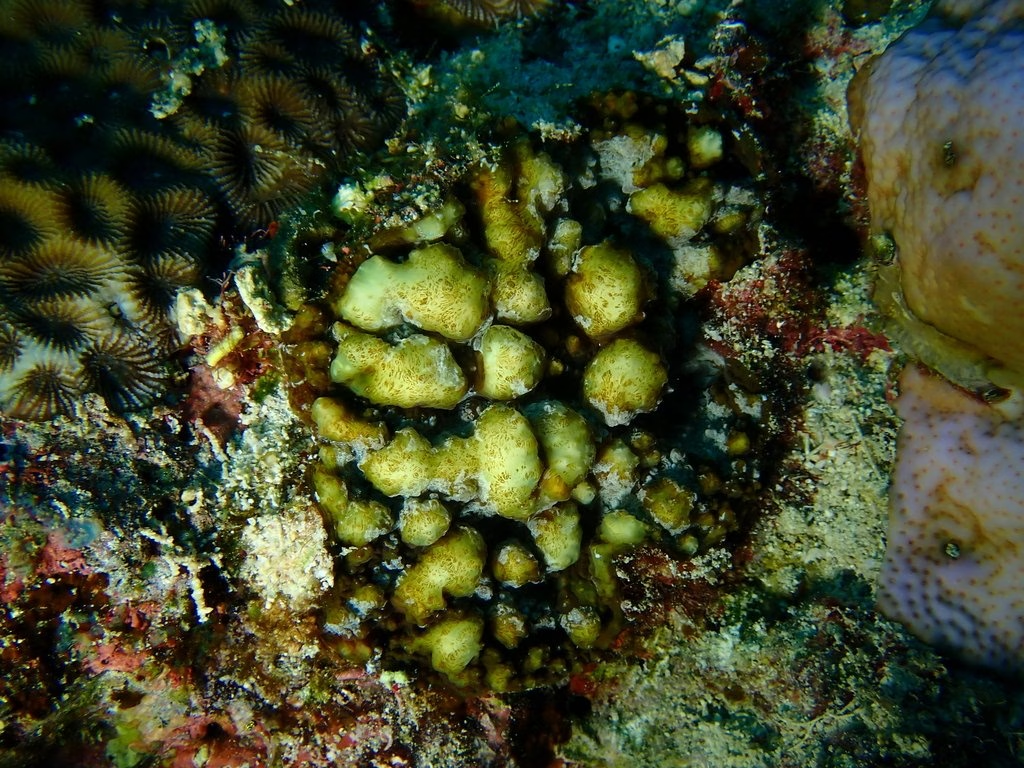
Chalice corals are plating LPS in vivid colours with contrasting eyes. Prized collectors’ corals.
| Scientific name | Echinophyllia, Oxypora and Mycedium spp. |
|---|---|
| Type | LPS |
| Origin | Indo-Pacific |
| Lighting | Low to moderate |
| Water flow | Low to moderate |
| Placement | Lower rock |
| Growth | Slow |
| Aggression | Sweepers at night |
| Feeding | Photosynthetic |
| Water | 24 to 26°C, 1.025 to 1.026 SG, alkalinity 7 to 9 dKH, calcium 400 to 450 ppm, magnesium 1,300 to 1,400 ppm |
| Difficulty | Easy to moderate |
What it is like to keep
Chalice corals (Echinophyllia, Oxypora, Mycedium and relatives) grow as plates or encrusting sheets, often in neon greens, oranges and reds with contrasting mouths (“eyes”). They are collector favourites and often sold under names like “watermelon” or “pectinia-style” chalice.
They are slow growing and fairly hardy once settled, but they dislike sudden changes in light. Some types throw out long, clear sweeper tentacles at night, so check yours with a torch after lights out before you place neighbours.
Placement, light and flow
Lower rock or a shaded ledge with low to moderate light (50 to 150 PAR) and gentle, indirect flow. Introduce them low and move them up over weeks if colours stay muted.
Feeding
Mainly photosynthetic. They accept fine foods and small mysis, and occasional feeding helps them grow.
Propagation and fragging
Cut a section of the plate with a wet saw or bone cutter and glue it flat to a plug or rock. Edges heal well.
Neighbours and compatibility
Peaceful with fish. Give them 10 cm of space from aggressive LPS such as torches and favia, and from leathers.
Graham’s tip: Chalices colour up under blue light. Don’t over-light them.
More care sheets: LPS Corals. Questions? Ask in the comments below and I’ll answer.
Photo: Debra Baker, CC BY, via iNaturalist.
Get in touch I’d love to hear from you