
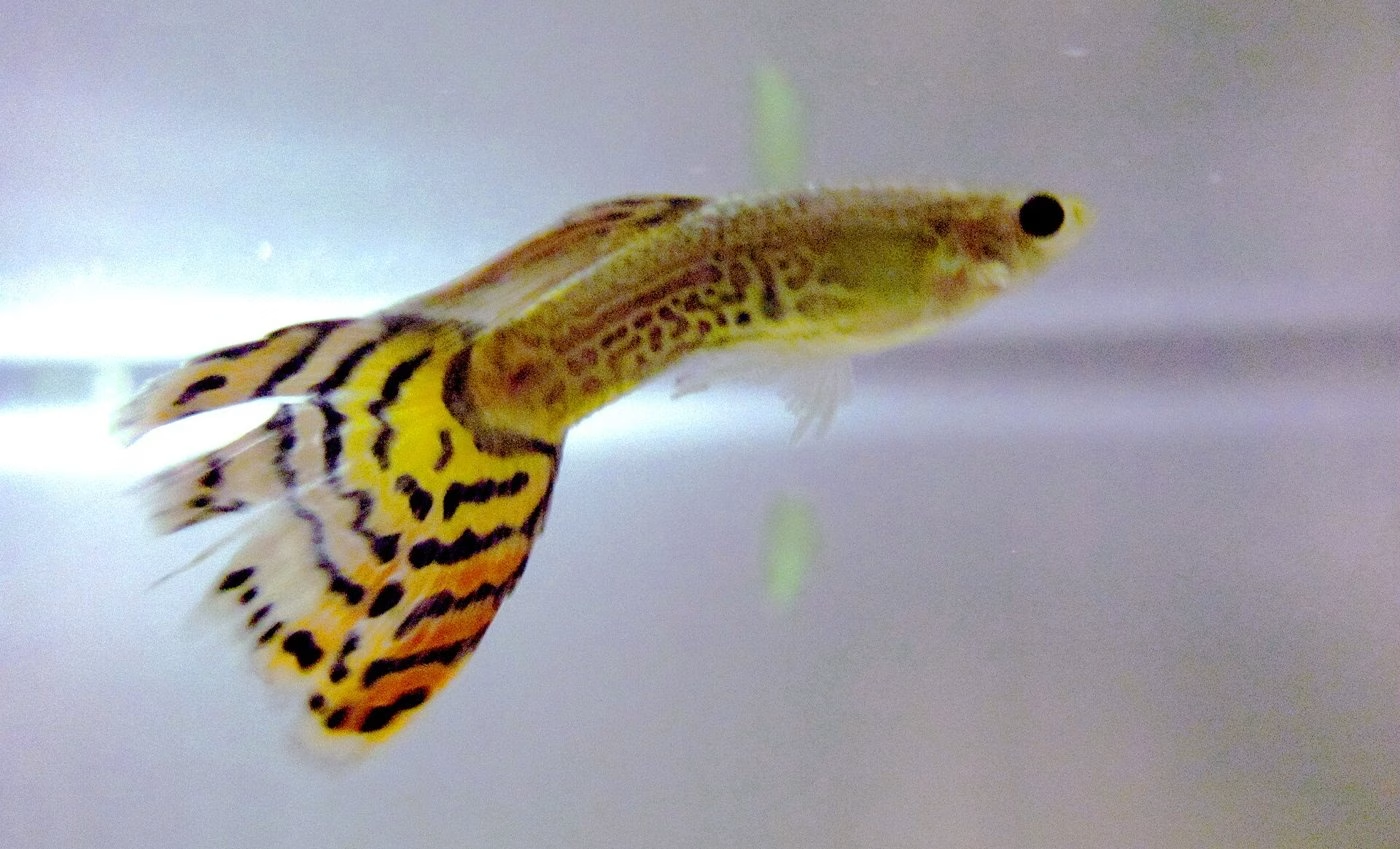
The guppy is the classic livebearer: tiny, colourful males with huge tails and larger, plainer females. Fancy guppies come in hundreds of colour and tail types, all bred from the same wild species.
| Scientific name | Poecilia reticulata |
|---|---|
| Family | Poeciliidae |
| Origin | Venezuela, Trinidad and northern Brazil |
| Adult size | 3 cm (male), 6 cm (female) |
| Lifespan | 2 to 3 years |
| Minimum tank | 60 litres |
| Temperature | 22 to 28°C |
| pH | 7.0 to 8.5 |
| Hardness | Medium to hard, 10 to 25 dGH |
| Swims in | Top to middle |
| Temperament | Peaceful |
| Group size | Groups, 1 male to 2 or 3 females, or males only |
| Diet | Omnivore: flake, micro pellets, frozen foods, vegetable matter |
| Difficulty | Easy |
What it is like to keep
Guppies love hard, alkaline water, so most UK tap water suits them well. Mass-farmed fancy guppies can be delicate and short-lived; locally bred fish from a hobbyist or good shop are much tougher. Males chase females constantly, so keep two or three females per male, or keep an all-male tank for colour without fry.
Setting up the tank
Planted tank with floating plants and fine-leaved plants for fry cover. Gentle filtration so long tails aren’t blown about.
Feeding
Flake, micro pellets, frozen daphnia and brine shrimp, plus some vegetable flake.
Breeding
Livebearers. Females give birth to 10 to 50 fry about every four weeks and can store sperm for several broods. Adults eat fry, so dense plants or moss help.
Tank mates
Good with platies, Endler’s (they interbreed), corydoras, Otocinclus, rasboras and peaceful tetras. Avoid fin nippers like tiger barbs and serpae tetras.
Graham’s tip: An all-male guppy tank is the most colourful beginner tank there is, and you won’t be overrun with babies.
More care sheets: Species Profiles. Questions? Ask in the comments below and I’ll answer.
Photo: Benoît Prieur, CC0, via Wikimedia Commons.

Get in touch I’d love to hear from you