
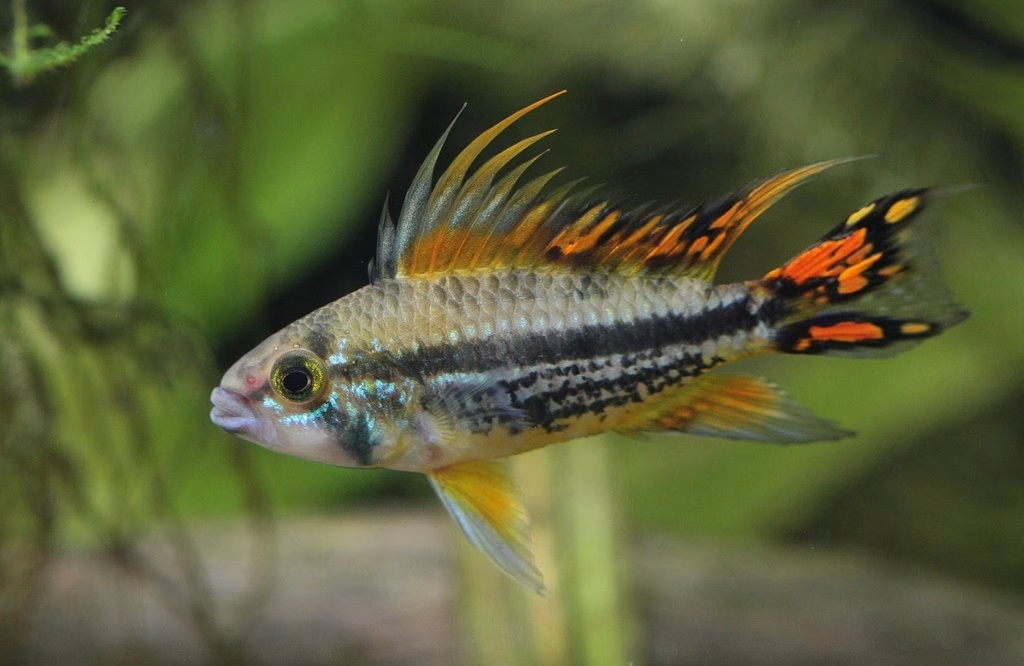
The cockatoo cichlid is the most popular Apistogramma, males sporting a tall spiky dorsal fin and red and orange tail. A great way into dwarf cichlids. This Cockatoo Dwarf Cichlid care sheet covers everything you need to keep one well.
| Scientific name | Apistogramma cacatuoides |
|---|---|
| Family | Cichlidae |
| Origin | Upper Amazon, Peru and Colombia |
| Adult size | 9 cm (male), 5 cm (female) |
| Lifespan | 5 years |
| Minimum tank | 60 litres |
| Temperature | 24 to 28°C |
| pH | 5.5 to 7.5 |
| Hardness | Soft to medium |
| Swims in | Bottom |
| Temperament | Peaceful, territorial when breeding |
| Group size | 1 male with 1 to 3 females |
| Diet | Carnivore: frozen bloodworm, brine shrimp, small pellets |
| Difficulty | Moderate |
What it is like to keep
Hardier than most apistos and widely bred in captivity. Males hold a territory with several females each guarding a cave.
Setting up the tank
Sand, caves (coconut shells are perfect), leaf litter and plants. Dim light.
Feeding
Frozen bloodworm, brine shrimp, daphnia and small pellets.
Breeding
Females lay eggs inside caves and guard the fry fiercely. Very rewarding to watch.
Tank mates
Good with tetras, rasboras, Otocinclus and small corys. One male per tank unless large.
Graham’s tip: Leaf litter isn’t just decoration. It gives females somewhere to hide and makes the whole tank calmer.
More care sheets: Species Profiles. Questions? Ask in the comments below and I’ll answer.
Photo: Dornenwolf, CC BY, via iNaturalist.
Get in touch I’d love to hear from you