
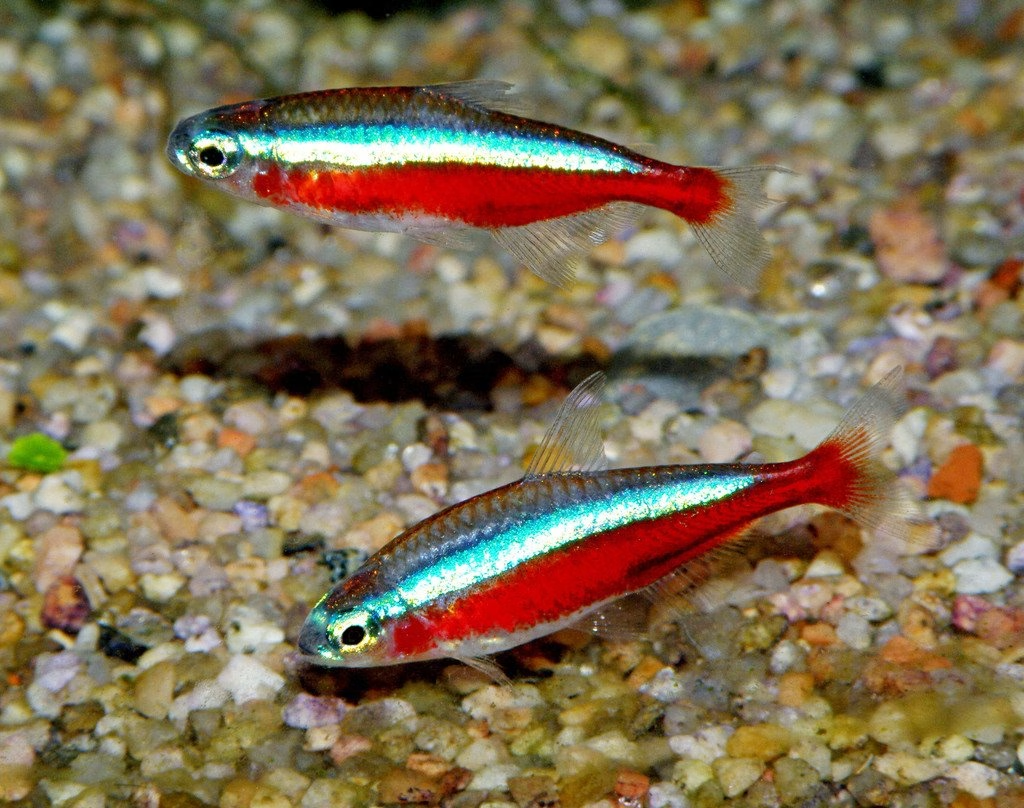
The cardinal tetra is the neon tetra’s bigger, bolder cousin, with that red stripe running the full length of the body rather than stopping halfway. A shoal of twenty turning together under soft light is still one of the best sights in the hobby.
| Scientific name | Paracheirodon axelrodi |
|---|---|
| Family | Characidae |
| Origin | Rio Negro and Orinoco basins, South America |
| Adult size | 5 cm |
| Lifespan | 5 to 10 years |
| Minimum tank | 80 litres |
| Temperature | 24 to 29°C |
| pH | 4.5 to 7.0 |
| Hardness | Soft, 1 to 8 dGH |
| Swims in | Middle |
| Temperament | Peaceful |
| Group size | 10 or more |
| Diet | Omnivore: micro pellets, flake, frozen bloodworm and daphnia |
| Difficulty | Moderate |
What it is like to keep
Most cardinals in UK shops are still wild-caught from the Rio Negro, which matters: they arrive stressed and need a mature, stable tank. Put them into a tank that has been running for at least three months, not a brand new set-up. Once settled they are hardy, long-lived little fish and far less prone to the diseases that plague farmed neons.
They like it warmer than neons, so they pair well with discus, rams and other heat lovers.
Setting up the tank
Dim the lights or use floating plants, add a dark substrate and some wood, and you’ll see their colour at its best. Soft, slightly acidic water is ideal, though settled fish cope with moderately hard tap water. Keep nitrate low with weekly water changes of around 25 percent.
Feeding
Small mouths, so crush flake or use micro pellets. Frozen or live daphnia, cyclops and baby brine shrimp bring the colour up and condition them.
Breeding
Rarely bred at home. They need very soft, acidic water (under 1 dGH, pH around 5), a darkened spawning tank and infusoria for the fry. Most commercial stock is still wild.
Tank mates
Ideal with Rummy Nose Tetra, Ember Tetra, Harlequin Rasbora, corydoras, Otocinclus and dwarf cichlids such as German blue rams. Avoid angelfish adults large enough to swallow them and anything boisterous.
Graham’s tip: Buy them from a shop that has had them in for a week or two. Freshly imported cardinals often carry losses for the first fortnight, and you want the shop to absorb that, not your tank.
More care sheets: Species Profiles. Questions? Ask in the comments below and I’ll answer.
Photo: CHUCAO, CC BY-SA, via iNaturalist.
Get in touch I’d love to hear from you